
Albums
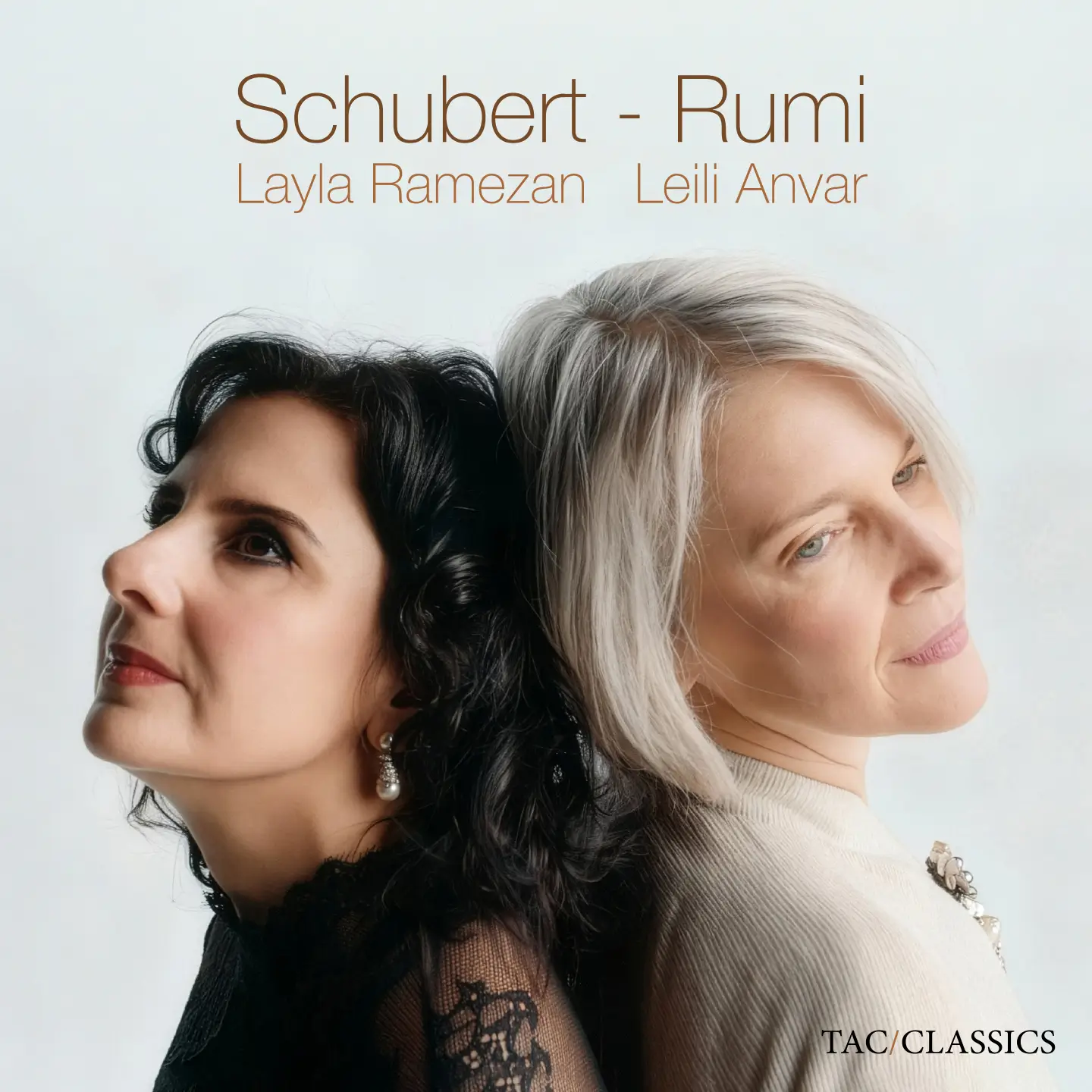
Schubert — Rumi Layla Ramezan, Leili Anvar piano, narration
There are encounters that do not involve time or space. The music of Schubert and the poetry of Rumi are recognized in this way: as two souls separated by centuries but coming from the same vital breath.
Both know suffering. Both look at her bluntly. But neither Schubert nor Rumi settled there. Their art is never resignation: it is an invitation to live — more intensely, more lucidly, more humbly.
Where Schubert the Wanderer wanders the world, the mystic Rumi gets lost in the divine. But this difference is only apparent. Because both are looking for the same thing: a place where the soul ceases to be foreign to itself.
Schubert's music descends into the intimate, Rumi's poems rise to intoxication. Between the two, the same breath circulates: that of a human being confronted with love, finitude, and this irrepressible desire for infinity.
Where darkness dissolves into light, and restraint into ecstasy, where Schubert and Rumi meet there is no longer an East or a West, no more century, no more language. There is only one question, asked again and again, in the silence after the last note:
Who are we when we really listen?
Layla Ramezan

Layla Ramezan Plays 100 Years of Iranian Piano Music
Vol1: Composers of the 1950s
Iran is a nation with an ancient musical tradition. Traditional music still plays an extremely important role in it today, alongside the various regional folk variants. Western classical music made its entrance there around 1850, especially through France, especially through France, and despite its young age, Iranian classical music fascinates by its incredible richness and diversity and its ability to mix the multiple elements that cross it.
The composers on this record are a perfect example of this very particular variety. Born between 1929 and 1958, most studied in Europe, mainly in Austria and France, but also in the United States. And while musical styles are sometimes continuously opposed, all are in one way or another the carriers of a musical tradition that is constantly reinventing itself.
- Mohammad Reza Darvishi - (1955)
- Behzad Ranjabaran - (1955)
- Hormoz Farhat - (1929)
- Iradj Sahbai - (1945)
- Fuzieh Majd - (1938)
- Nader Mashayekhi - (1958)
- Reza Vali - (1952)”

Layla Ramezan Plays 100 Years of Iranian Piano Music
Vol 2: Sheherazade by Alireza Mashayekhi
Alireza Mashayekhi's Sheherazade cycle (1939) is truly the masterpiece of Iranian classical piano music. Composed in 1992, it is based on the story of the Persian king Shahryar and Sheherazad, from the Arabian Nights Accounts, but transposes it on a psychological level, expressing the inner duality of being and the heartbreaking struggle it causes in him.
Organized in 9 parts around a short story originally written by the composer, using the elements of the original tale, Mashayekhi's piano pieces are arranged around the reading of the story and improvisations on Zarb and Santur. Layla Ramezan is thus accompanied by Djamchid and Keyvan Chemirani, both members of the brilliant Chemirani family trio that is internationally renowned on the world music and Persian music stages.”